Vanishing Cultures Archive

Explore the archive page to discover regional, cultural, and thematic collections. Each page provides context, voices, and lived realities.
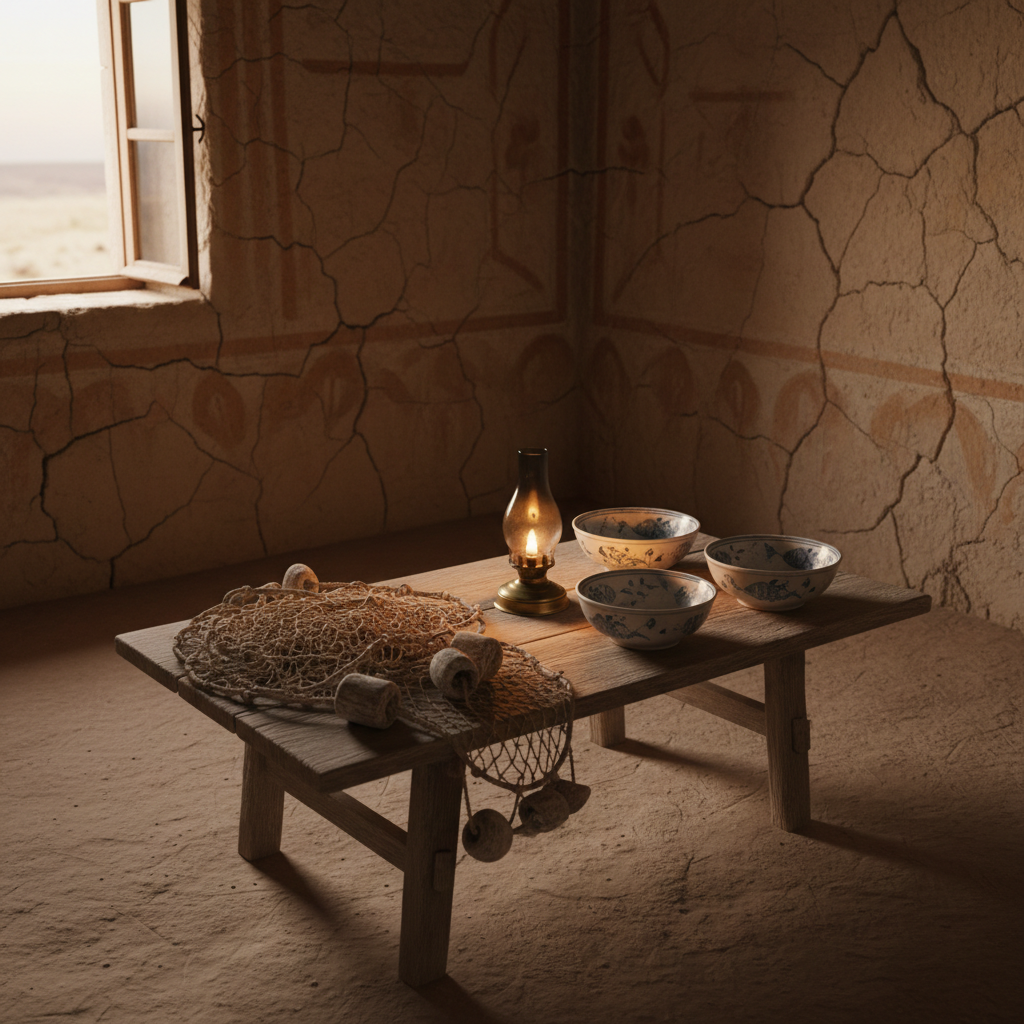
A low wooden table sits in the center of a modest earthen-floor room, covered with a carefully arranged collection of traditional objects from an endangered coastal community: handwoven fishing nets with uneven knots, salt-stained wooden floats, delicately painted ceramic bowls, and a small oil lamp with soot-darkened glass. The clay walls are rough and cracked, bearing traces of faded mural patterns. Warm evening light from a single open window grazes the surfaces, casting long, soft shadows and highlighting the patina of age. Photographed from a slightly elevated angle with a medium depth of field, the composition feels intimate and reverent. The image has a calm, museum-like atmosphere, rendered in photographic realism with subdued colors and a sophisticated documentary tone.
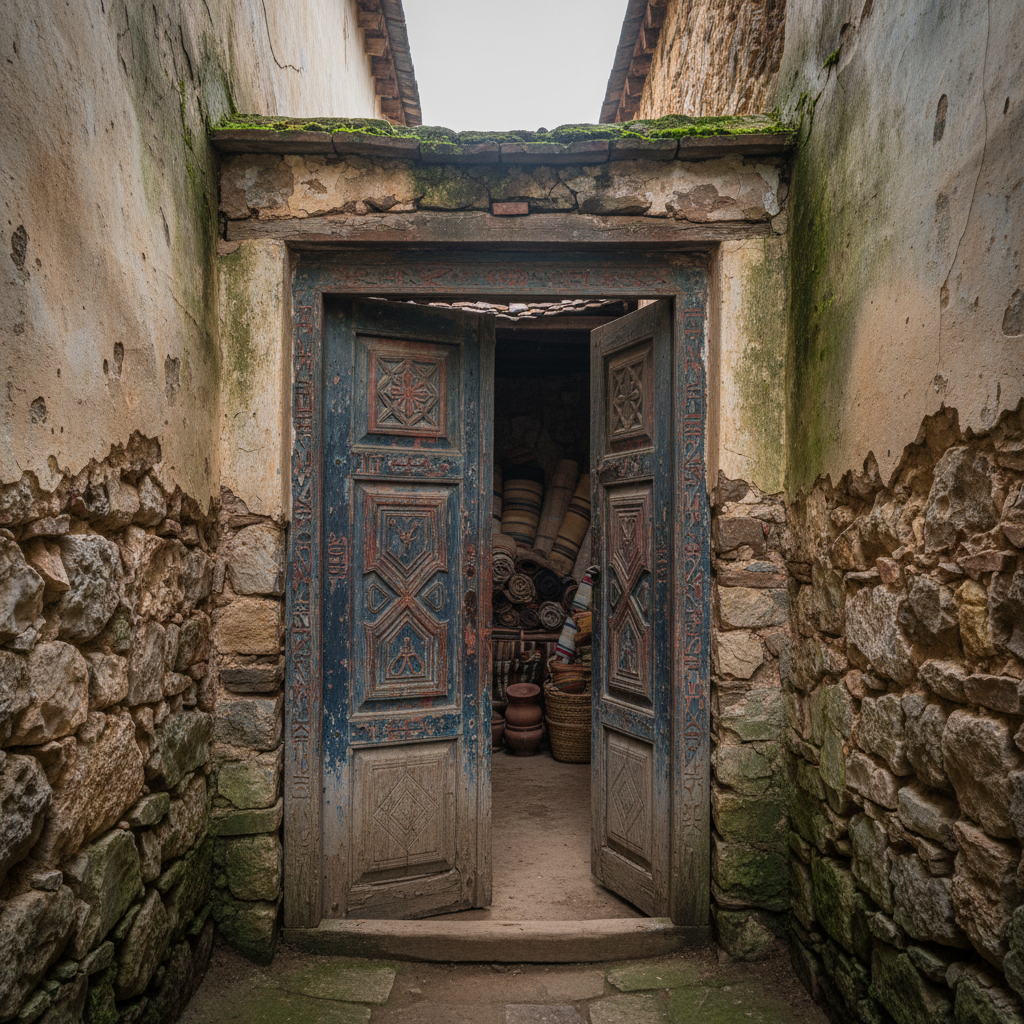
An intricately carved wooden doorway from a remote mountain village stands slightly ajar in a narrow stone alleyway, revealing a glimpse of a dim, cluttered interior filled with handmade textiles and pottery. The door is adorned with fading geometric patterns and symbols, its paint chipped to reveal layers of color beneath. Moss-covered stones and weathered plaster walls frame the entrance. Soft overcast daylight filters in from above, creating gentle, diffused light that enhances the textures without harsh shadows. Captured from a straight-on, eye-level perspective with balanced composition, the image feels like an invitation into a hidden world. The photographic style is realistic, muted, and sophisticated, emphasizing the quiet dignity of vanishing architectural traditions.

Archive by Region

The archive is organized into regional, cultural, and thematic collections with intuitive navigation and search to discover disappearing ways of life.

Expeditions Timeline

(None yet funded)

A weathered wooden travel journal lies open on an antique desk made of dark, scratched oak, its pages filled with intricate hand-drawn maps, pressed wildflowers, and faded ticket stubs from distant places. Around it are worn leather field recording equipment cases, a vintage film camera, and a small compass resting on a frayed cloth map showing remote regions of the world. Late afternoon window light slants across the scene, creating long, soft shadows and illuminating dust particles in the air. Shot at eye level with a shallow depth of field, the focus rests on the journal’s textured pages, while the background softly blurs. The mood is contemplative and archival, evoking photographic realism with a sophisticated, documentary aesthetic.

First Crossing

This section chronicles expeditions and documentation trips in a chronological story.
First subculture project

Homelessness

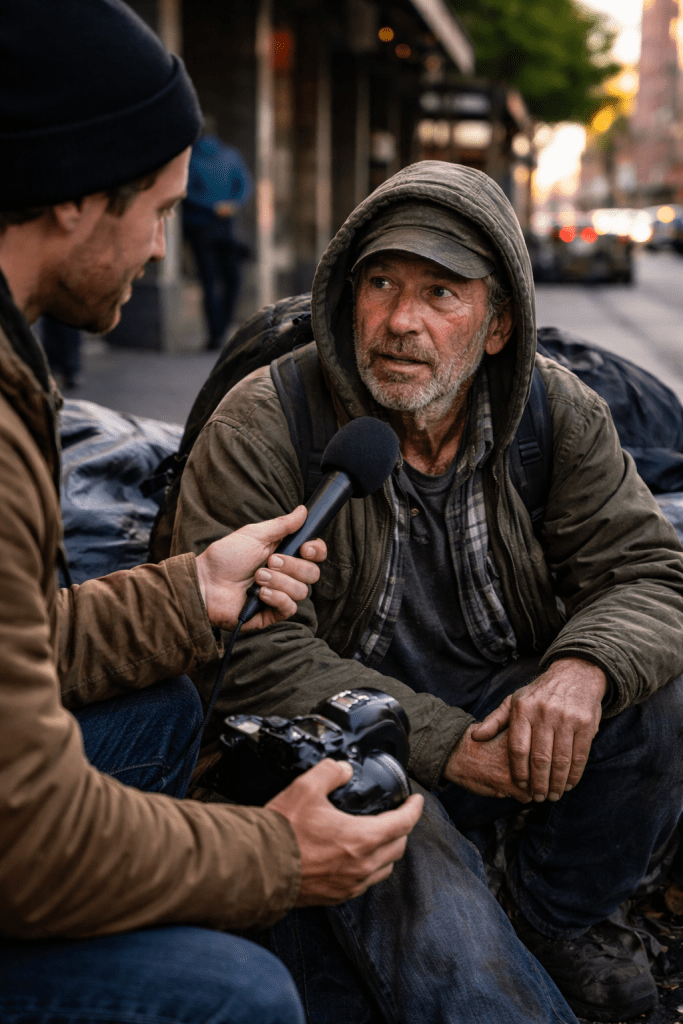
An informative interview .


What I Learned from Interviewing People Experiencing Homelessness
Culture, community, survival, and the psychology most people never stop long enough to see


Over the course of recorded and off-camera conversations with people experiencing homelessness, one thing became very clear: homelessness is not just a social problem to observe from a distance. It is an entire human world—one with its own culture, survival codes, relationships, dangers, loyalties, losses, and unspoken rules.


What I found was not a group of people lacking identity, but a population forced to adapt identity around instability. Many live in a constant state of vigilance. Trust is not given easily, because betrayal, exploitation, rejection, and disappointment are often familiar experiences. Survival reshapes the mind. When daily life becomes centered around safety, food, sleep, weather, territory, and reading people quickly, psychology changes with it. The nervous system does not rest easily when life itself feels uncertain.


I also saw that homelessness often contains its own forms of community. There are social structures, protective alliances, pecking orders, shared information networks, and at times even a kind of street family system. Some people look out for one another. Some exploit one another. Many do both at different times depending on what survival requires. It is not a simple world, and reducing it to stereotypes blinds us to what is really happening.


The interviews also revealed something deeper: many people without housing do not just struggle with material deprivation. They struggle with invisibility. People speak around them, about them, or past them—but rarely with genuine curiosity about how they see the world. That matters. Because once a person feels unseen long enough, it can begin to shape identity, hope, motivation, and even the belief that reintegration into broader society is possible.


This project is important to me because I believe understanding people at the margins helps us better understand humanity itself. If we want real solutions, we have to go beyond assumptions. We have to listen. We have to be willing to learn the psychology of survival, the meaning of belonging in unstable environments, and the emotional cost of being dismissed by the world around you.


This is only the beginning. These early interviews are part of a much larger mission to document overlooked communities, understand them more deeply, and preserve what they can teach us about suffering, adaptation, resilience, identity, and human nature. My hope is that this project does more than inform people. I hope it challenges people. I hope it humanizes those too often reduced to labels. And I hope it opens the door to deeper conversations about what homelessness really is—not just economically, but psychologically, socially, and culturally.


If this project speaks to you, I’d genuinely like to hear from you. Share your thoughts in the comments—what stood out to you, what challenged you, and what you connected with most. Thoughtful discussion, feedback, ideas, and support of any kind are deeply appreciated as this work continues.


This is not content for me. It is part of a larger life mission to understand people more honestly, preserve stories that might otherwise be lost, and bring more depth, dignity, and truth to how we see one another.